About the Centre
West Bengal's state-level core engine for technology translation, startup venture-building, and multi-vertical trade & industry development.
Driving Multi-Sector Innovation & Growth
The Dr. Syama Prasad Mukherjee Centre for Technology & Innovation (SPMCTI) is established as West Bengal's flagship platform for technology adoption, multi-vertical innovation, and entrepreneurial growth. Rather than operating as a conventional business incubator, the Centre serves as a comprehensive ecosystem builder — integrating academic research, startup acceleration, healthcare engineering, agricultural modernization, MSME cluster digitization, and export facilitation into a unified institutional framework.
Our facilities coordinate state-of-the-art laboratory testing, advanced computing clusters, specialized sandboxes, and advisory systems. By matching academic research with industrial requirements and bridging the gap between local startups and government procurement pipelines, SPMCTI turns challenges into scalable economic opportunities for the state of West Bengal.
Rooted in the legacy of building robust, self-reliant institutions, the Centre enables founders to scale, helps researchers commercialize laboratory prototypes, and drives cluster transformation. Through a network of district outreach centres and global trade links, SPMCTI is building sustainable capacity for the state's innovation economy.
Why the Centre Was Conceived
Sovereign Technology Capacity
Developing national capabilities in critical frontier technologies — AI, cybersecurity, and secure digital infrastructure — is essential. The Centre provides the compute resources and testing sandboxes to build these key components locally.
Systemic Research Translation
West Bengal possesses extensive research universities and lab talent, but lacks commercialization pathways. The Centre's Technology Transfer Office (TTO) bridges this gap by managing patent filings, corporate licensing, and prototyping grants.
Healthcare & MedTech Prototyping
Affordable healthcare requires domestic medical device innovation. The Centre hosts dedicated bio-design testing facilities and CDSCO regulatory clinics, linking healthtech startups directly with partner hospital pilots.
MSME Cluster Digital adoption
Traditional industries must digitize to remain competitive. SPMCTI deploys shared cloud ERPs, e-commerce enablement programs, and fintech/credit linkages directly into district manufacturing and trade clusters.
Primary Sector Innovation
Modernizing agriculture and fisheries via precision IoT systems, hydroponics, vertical farming chambers, and cold chain technology secures local supply chains and increases farmers' yields.
Export & Trade Gateway
Leveraging West Bengal's position as a trade gateway, the Centre coordinates with DGFT and chambers of commerce to provide logistics technology testing, customs training, and export readiness programs.
The Six Core Mandates
SPMCTI acts as the connective tissue, providing dedicated platforms, resources, and expert frameworks to support stakeholders across all key verticals.
By structuring collaboration models across startups, labs, clusters, hospitals, and trade offices, the Centre accelerates technological translation, digital adoption, and regional employment.
A Legacy of Institution-Building
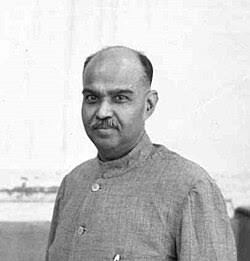
Dr. Syama Prasad Mukherjee
Visionary Scholar • Institution Builder • National Leader
The Centre draws its name and spirit from Dr. Syama Prasad Mukherjee — a visionary statesman, educationist, and nation-builder who played a foundational role in the political, academic, and industrial history of modern India and the state of West Bengal.
The Architect of Modern West Bengal
In 1947, during the partition of India, when proposals threatened to include the entire province of Bengal in Pakistan, Dr. Mukherjee spearheaded a resolute campaign to partition Bengal. By securing the Hindu-majority western districts within the Indian Union, he ensured the creation of West Bengal, preserved Kolkata as its capital, and secured a safe homeland for millions.
Pioneering Industrial Infrastructure
As India's first Minister for Industry and Supply in the post-independence cabinet, he established the core foundations of the nation's industrial policy. Under his leadership, monumental projects like the Chittaranjan Locomotive Works, the Sindri Fertilizer Factory, the Hindustan Aircraft Factory (now HAL), and the Damodar Valley Corporation (DVC) were founded.
Academic Reform & Innovation
At just 33, he served as the youngest Vice-Chancellor of the University of Calcutta (1934–1938). He introduced vernacular education in Bengali, expanded research in basic and applied sciences, and bridged the gap between academic research and local industrial needs—laying the groundwork for technology translation.
“This Centre carries forward that multi-faceted legacy — building a state-of-the-art institution that combines academic excellence, technological innovation, entrepreneurial ambition, and a commitment to public service. It is not a memorial but a living platform, designed to embody the spirit of building something enduring for the people of West Bengal and India.”
Dr. Syama Prasad Mukherjee's Journey
A timeline of key life events of the visionary scholar, leader, and institution-builder whose legacy inspires the Centre's mission.
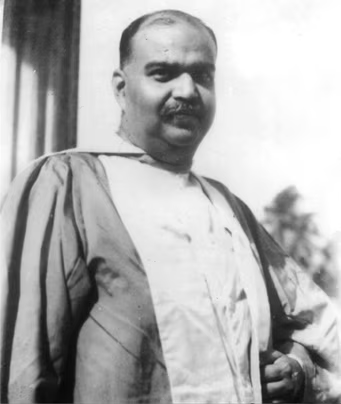
Dr. Syama Prasad Mukherjee
(1901 — 1953)
Early Life & Intellectual Roots
Born in Calcutta to Sir Asutosh Mookerjee, the legendary Vice-Chancellor of Calcutta University, nurturing a lifelong dedication to academic excellence.
Calcutta University Senate
Appointed to the Senate of Calcutta University, starting his impactful journey of educational reforms and institution-building.
Youngest Vice-Chancellor
Became the youngest Vice-Chancellor of Calcutta University at the age of 33, introducing scientific curricula, research funding, and vernacular education.
First Cabinet Minister of India
Appointed by Jawaharlal Nehru as India's first Minister for Industry and Supply (currently known as Minister of Commerce and Industries), establishing major national industrial infrastructure, including the Chittaranjan Locomotive Works.
Bharatiya Jana Sangh
Founded the Bharatiya Jana Sangh, advocating for national unity, civil liberties, and sovereign integration, shaping India's political history.
Be Part of the Journey
The Centre is building something ambitious for West Bengal. Whether you are a founder, researcher, partner, or policymaker — we invite you to contribute to this mission.